Suburban architecture across master-planned Katy communities such as Cinco Ranch, Grand Lakes, and Elyson creates unique structural vulnerabilities along rooflines. Roof rats (Rattus rattus) utilize overhead utility…
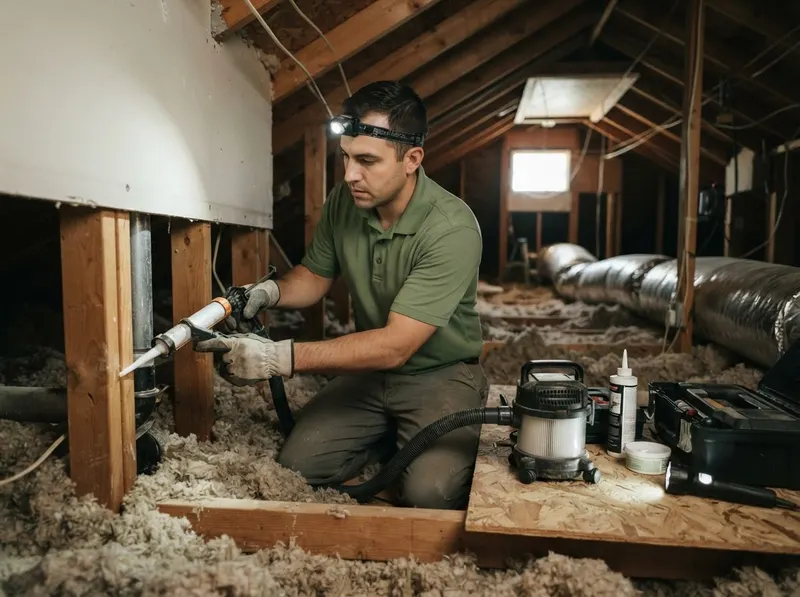
Suburban architecture across master-planned Katy communities such as Cinco Ranch, Grand Lakes, and Elyson creates unique structural vulnerabilities along rooflines. Roof rats (Rattus rattus) utilize overhead utility lines and live oak branches along streetscapes to bypass ground perimeters and exploit architectural gaps. Roof returns, freeze-board seams, and plastic ridge vents common to brick builds offer soft entry into warm attics. Once inside, nesting activity degrades blown-in fiberglass insulation, generates foul urine odor vectors, and presents gnawing hazards along electrical branch circuits. True restoration requires sealing the structure from the outside rather than broadcasting rodenticide baits that leave rodents to decompose inside unreachable drywall voids.
Technicians conduct a structured, four-phase remediation: 1. A 360-degree exterior audit maps roofline transitions, AC chase lines, and brick weep holes. 2. Heavy-gauge, 1/4-inch galvanized steel wire mesh and metal flashing mechanically seal every opening exceeding 1/4 inch, preventing rodent reentry while maintaining critical attic ventilation. 3. Mechanical snap traps positioned along identified rodent runways eliminate the trapped population within 5 to 7 days, avoiding off-target toxic risks to household dogs, cats, or neighborhood wildlife. 4. Industrial-grade HEPA-vacuum extraction removes droppings and soiled insulation, followed by an ultra-low-volume enzymatic sanitizing fog that neutralizes pathogens and eradicates scent markers.
Decision guidance depends strictly on the severity of the structural intrusion. If drywall scratching noises occur without visible dropping migration into living quarters, localized roof-junction sealing and an exterior station defense prevent interior colonization without requiring major insulation tear-outs. If ceiling drywall staining, foul nesting odors, or HVAC duct chewing are present, frequently observed in established Firethorne and Falcon Point properties, comprehensive envelope exclusion paired with insulation extraction and thermal sanitization is necessary. The trade-off is focused mechanical defense versus full substrate remediation; partial trapping without structural sealing leaves the home permanently vulnerable to fresh rodent colonies following Katy's seasonal temperature drops.
Every job gets a firm, written price after a free on-site visit.
Tell us about your attic rodent exclusion & sanitation job in Katy and we'll send a clear, written quote, usually the same day.
 Lone Creek Pest Control